Live Traffic Feed

Wednesday, January 04, 2006

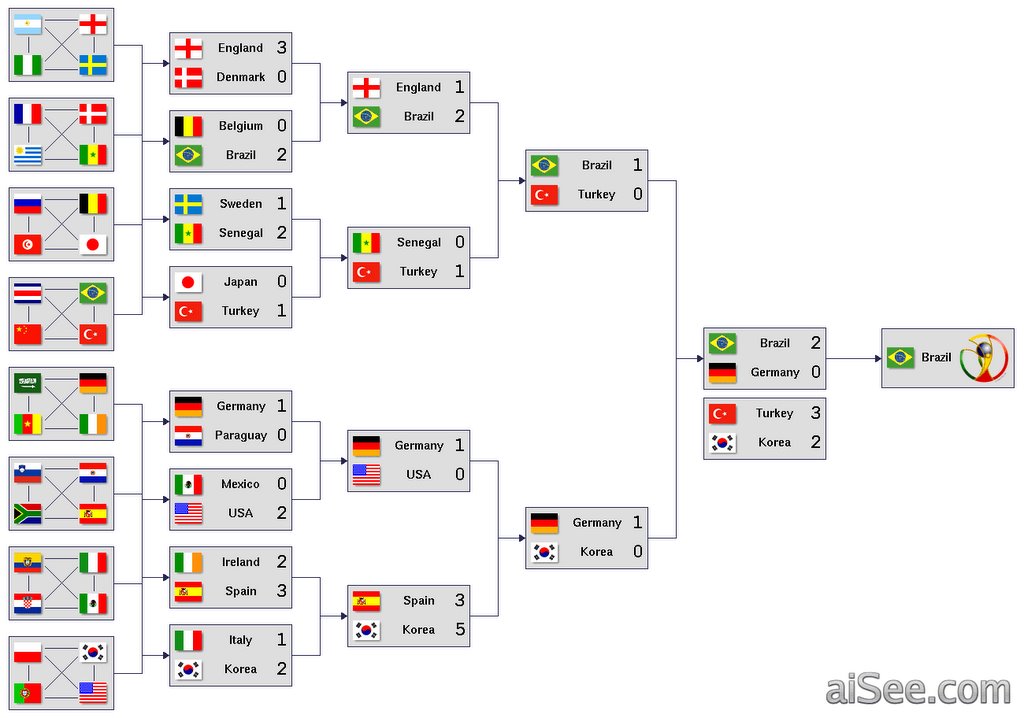
Fifa world cup 2002 china


Klikoni ne photo per te pare si jan kualifiku ne 2002

Apart from labels and icon files, aiSee allows additional pieces of information, i.e. text fields, to be associated with nodes. This information can be easily accessed by simply pressing 'i', followed by selecting one or several nodes (see screenshot). Alternatively, you can first select a node or a subgraph and then switch between its additional information windows by pressing

Sunday, December 18, 2005

"Welcome to the 2006 FIFA World Cup Germany™"
Seventeen years after the fall of the Berlin wall, a reunified Germany will throw open its doors to the world. Germany 2006 will be a place where people from all around the world will be welcomed by friends, in the spirit of the striking slogan chosen by the organisers: Die Welt zu Gast bei Freunden.
The tournament is being held on the finest stage in the world, one whose symbolism far transcends the boundaries of sport. Hark back to Germany’s triumph at the 1954 FIFA World Cup in Switzerland, which sealed the country’s return to the international fold in the most beautiful manner possible.
In 2006, Germans will have the opportunity to rectify certain clichés and preconceived ideas. The world will have the chance to see what a fantastic country Germany truly is: the beauty and diversity of its landscapes, its rich cultural heritage and the intelligence and good humour of its people.
As for the legendary German work ethic and organisational skills, I am pleased to say those perennial qualities are alive and well - and we at FIFA are only too happy to take advantage of them.
For at all levels, the overall investment in any World Cup tournament is immense. The event is financially supported by the German state, but also by the “Länder” and the Host Cities. I would like to take this opportunity to offer my heartfelt thanks to all those who are currently working with such passion and commitment to make the occasion a memorable one.
Today’s efforts will bear fruit tomorrow. German football, for example, will boast twelve spanking new or vastly improved stadiums in 2006. The whole German population too will benefit in terms of better transport and reception infrastructures.
Football clubs, schools and people all over the land have really got behind this great event, providing further proof, if any were needed, of the prominent role football plays in all our lives. In this respect I would like to congratulate the German Football Association for inviting people from all walks of live to take part in this great event.
Needless to say, none of this comes as a surprise and I am well aware of the loyalty of the Deutscher Fussball-Bund* and its President, my good friend Gerhard Mayer-Vorfelder. They enjoy my complete confidence in their ability to organise a tournament every bit as good as in 1974.
Like Mexico, Italy and France, Germany is now organising its second FIFA World Cup. The first saw the great Franz Beckenbauer lift the trophy as captain of the winning team. Today, he presides over the Local Organising Committee in the run-up to a tournament which has changed considerably down the years: back in 1974, only sixteen sides took part, including the now-defunct German Democratic Republic (GDR) and Zaire. The latter were the only representative from the African continent and conceded fourteen goals with no reply.
The 2006 tournament will be a vastly different affair. Thirty-two teams will have qualified, including five from Africa, all of whom now perform at a far higher level. Just remember how Senegal upset the odds in Korea and Japan in 2002. The same can be said for Asian teams, who produced a semi-finalist last year, something which would have been unthinkable back in 1974!
These performances bear witness to FIFA’s efforts in the last quarter of a century to help the nations of the football world to compete on an equal footing. I will have the immense pleasure of welcoming you amongst my friends in Germany. We look forward to seeing you in 2006 to celebrate this unity!
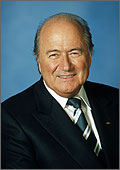
Joseph S. BlatterFIFA President

Wednesday, December 14, 2005

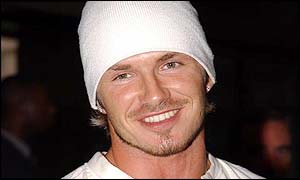
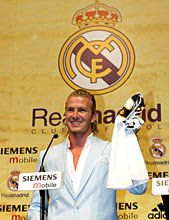
David Beckham


Full Name: David Robert Joseph Beckham
Birthplace: Leytonstone, 2/5/1975
Zodiac Sign: Taurus
Hair: Light Brown Eyes: Dark Blue
Scar: Left Cheek
Height: 180cm - 5ft 11in Weight: 67kg - 10st 8lb
Family: Parents Sandra & Ted, sisters Joanne & Lynne
Wife: Victoria Caroline Adams Beckham
Sons: Brooklyn Joseph Beckham, Romeo Beckham

Full International: England (58 caps, 10 goals)
Position: Midfield
Squad Number: 23
Appearances (1992-2000): 387
Goals Scored with Club: 81
Signed On: 29-01-1993

World Cup Groups

Fixtures
Group stages
FRIDAY 9 JUNE Group A Germany v Costa Rica 1700, Munich Poland v Ecuador 2000, Gelsenkirchen

SATURDAY 10 JUNE Group B England v Paraguay 1400, Frankfurt Trinidad & Tobago v Sweden 1700, Dortmund

Group C Argentina v Ivory Coast 2000, Hamburg
SUNDAY 11 JUNE

Group C Serbia & Montenegro v Holland 1400, Leipzig

Group D Mexico v Iran 1700, Nuremberg Angola v Portugal 2000, Cologne
MONDAY 12 JUNE

Group F Australia v Japan 1400, Kaiserslautern


Group E USA v Czech Republic 1700, Gelsenkirchen Italy v Ghana 2000, Hanover
TUESDAY 13 JUNE

Group G South Korea v Togo 1400, Frankfurt France v Switzerland m1700, Stuttgart

Group F Brazil v Croatia 2000, Berlin
WEDNESDAY 14 JUNE

Group H Spain v Ukraine 1400, Leipzig Tunisia v Saudi Arabia 1700, Munich

Group A Germany v Poland 2000, Dortmund
THURSDAY 15 JUNE

Group AEcuador v Costa Rica 1400, Hamburg

Group BEngland v Trinidad & Tobago 1700, Nuremberg Sweden v Paraguay 2000, Berlin
FRIDAY 16 JUNE

Group C Argentina v Serbia & Montenegro 1400, Gelsenkirchen Holland v Ivory Coast 1700, Stuttgart
Group D Mexico v Angola 2000, Hanover
SATURDAY 17 JUNE

Group D Portugal v Iran 1400, Frankfurt

Group E Italy v USA 1700, Kaiserslautern Czech Republic v Ghana 2000, Cologne
SUNDAY 18 JUNE

Group F Japan v Croatia 1400, Nuremberg Brazil v Australia 1700, Munich

Group G France v South Korea 2000, Leipzig
MONDAY 19 JUNE

Group G Togo v Switzerland 1400, Dortmund

Group H Saudi Arabia v Ukraine 1700, Hamburg Spain v Tunisia 2000, Stuttgart
TUESDAY 20 JUNE

Group A Ecuador v Germany 1500, Berlin Costa Rica v Poland 1500, Hanover

Group B Sweden v England 2000, Cologne Paraguay v Trinidad & Tobago 2000, Kaiserslautern
WEDNESDAY 21 JUNE

Group D Portugal v Mexico 1500, Gelsenkirchen Iran v Angola 1500, Leipzig

Group C Holland v Argentina 2000, Frankfurt Ivory Coast v Serbia & Montenegro 2000, Munich
THURSDAY 22 JUNE

Group E Czech Republic v Italy 1500, HamburgGhana v USA 1500, Nuremberg

Group F Japan v Brazil 2000, Dortmund Croatia v Australia 2000, Stuttgart
FRIDAY 23 JUNE

Group H Saudi Arabia v Spain 1500, Kaiserslautern Ukraine v Tunisia 1500, Berlin

Group G Togo v France 2000, Cologne Switzerland v South Korea 2000, Hanover


Knockout stages
SATURDAY 24 JUNEGame One:Winner Group A v Runner-up Group B 1600, Munich

Game Two:Winner Group C v Runner-up Group D 2000, Leipzig

SUNDAY 25 JUNEGame Three:Winner Group B v Runner-up Group A 1600, Stuttgart

Game Four:Winner Group D v Runner-up Group C 2000, Nuremberg

MONDAY 26 JUNEGame Five:Winner Group E v Runner-up Group F 1600, Kaiserslautern

Game Six:Winner Group G v Runner-up Group H 2000, Cologne

TUESDAY 27 JUNEGame Seven:Winner Group F v Runner-up Group E 1600, Dortmund

Game Eight:Winner Group H v Runner-up Group G 2000, Hanover

FRIDAY 30 JUNEQuarter-Final One:Winner Game One v Winner Game Two 1600, Berlin

Quarter-Final Two:Winner Game Five v Winner Game Six 2000, Hamburg

SATURDAY 1 JULYQuarter-Final Three:Winner Game Three v Winner Game Four 1600, Gelsenkirchen

Quarter-Final Four:Winner Game Seven v Winner Game Eight 2000, Frankfurt

TUESDAY 4 JULYSemi-Final One:Winner Quarter-Final One v Winner Quarter-Final Two 2000, Dortmund

WEDNESDAY 5 JULYSemi-Final Two:Winner Quarter-Final Three v Winner Quarter-Final Four 2000, Munich

SATURDAY 8 JULYThird/Fourth place play-off:Loser Semi-Final One v Loser Semi-Final Two 2000, Stuttgart

SUNDAY 9 JULYFinal:Winner Semi-Final One v Winner Semi-Final Two 1900, Berlin